Visual Story Telling:
Marketing Campaign Analysis
I was provided with website traffic and purchase data and tasked with evaluating the effectiveness of two marketing campaigns (Campaign A and Campaign B). Using the data, I analyzed customer acquisition performance across multiple social outreach channels, including Instagram, email marketing, and web banner advertising, to determine which campaign and channel combination generated the highest volume of new customer traffic and conversions.
Understanding the raw data
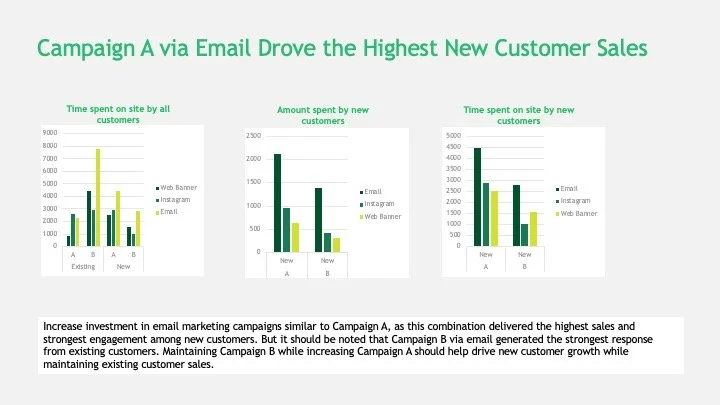
I started with a raw dataset containing customer IDs, campaign types, marketing channels, customer types, purchase activity, time spent on site, and sales revenue. Since each row represented an individual customer interaction, it was difficult to identify trends by simply reviewing the data. The first step was understanding what information was available and determining which fields would help answer the business question: which campaign and channel combination performed best for acquiring new customers?
Create and filter the pivot table
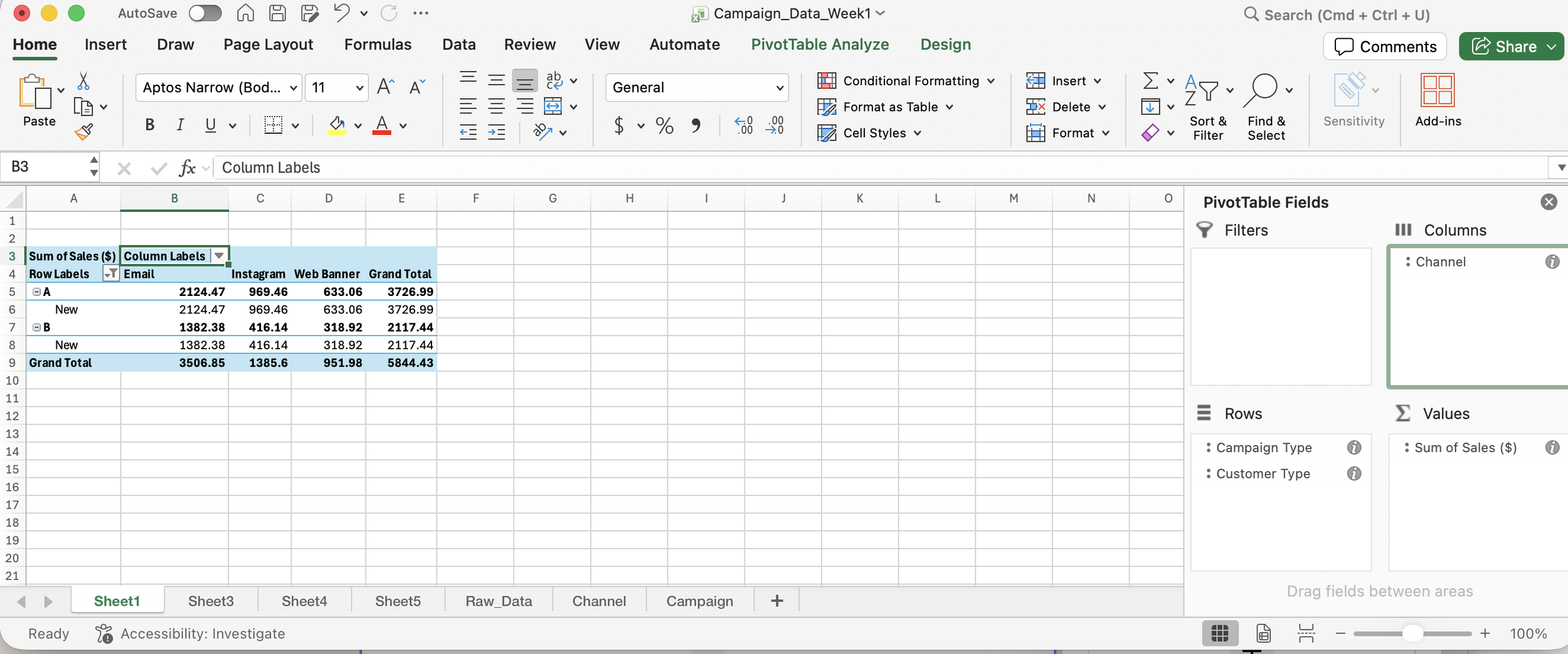
To make the data easier to analyze, I created a PivotTable using Campaign Type and Customer Type as row fields, Channel as the column field, and Sales ($) as the value field. I then used a Customer Type filter to isolate new customers. This transformed hundreds of individual records into a summarized view that allowed me to directly compare Campaign A and Campaign B across Email, Instagram, and Web Banner channels.
Present findings and recommendation
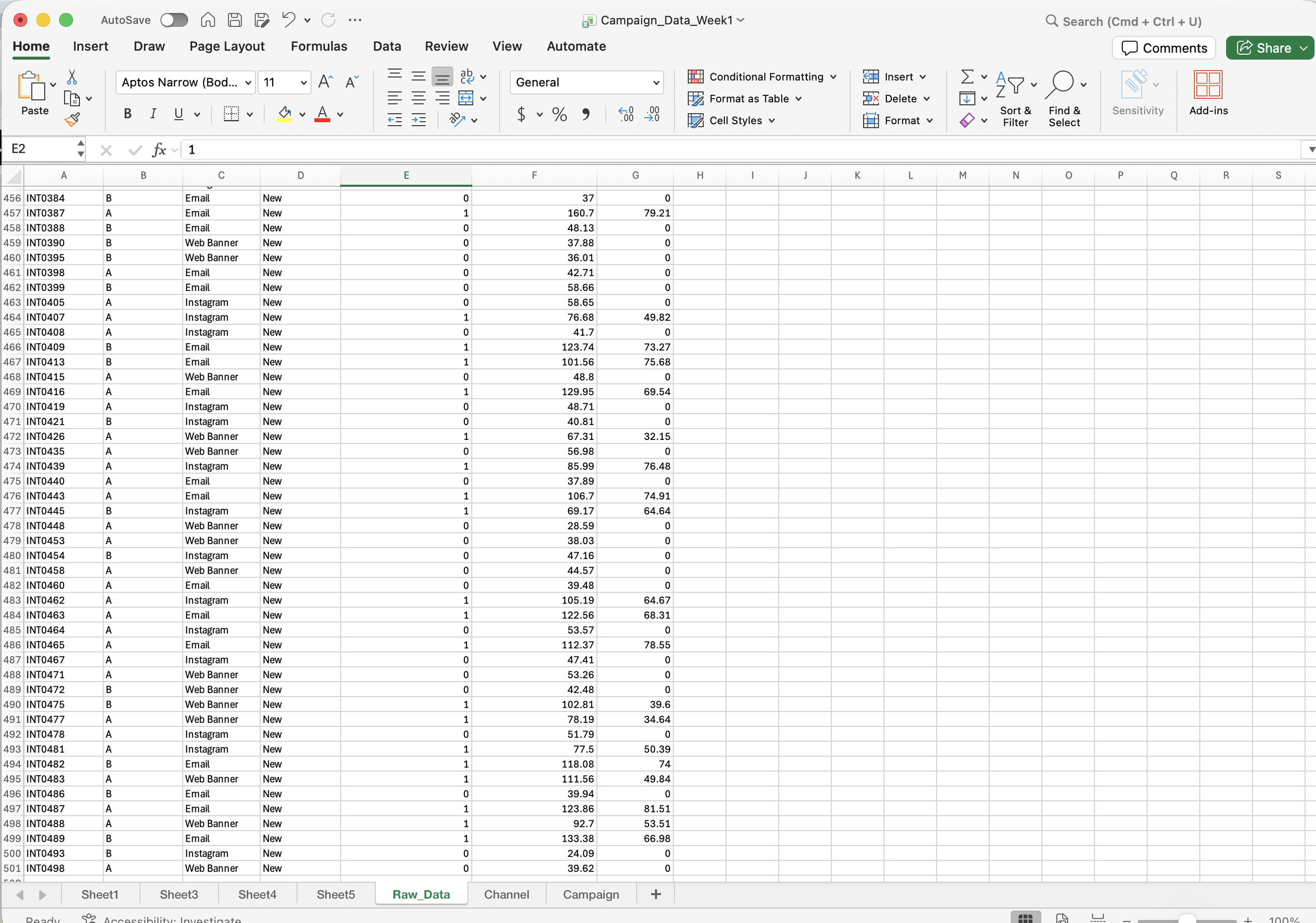
After reviewing the PivotTable results, I identified performance differences between campaigns and channels. Campaign A generated higher sales than Campaign B across all channels, with Email producing the strongest results. Based on this analysis, I recommended increasing investment in Campaign A Email marketing efforts, as this combination delivered the highest sales and engagement among new customers while outperforming all other channel and campaign combinations.
Stakeholder Research and Recommendation Development
Analyze survey results
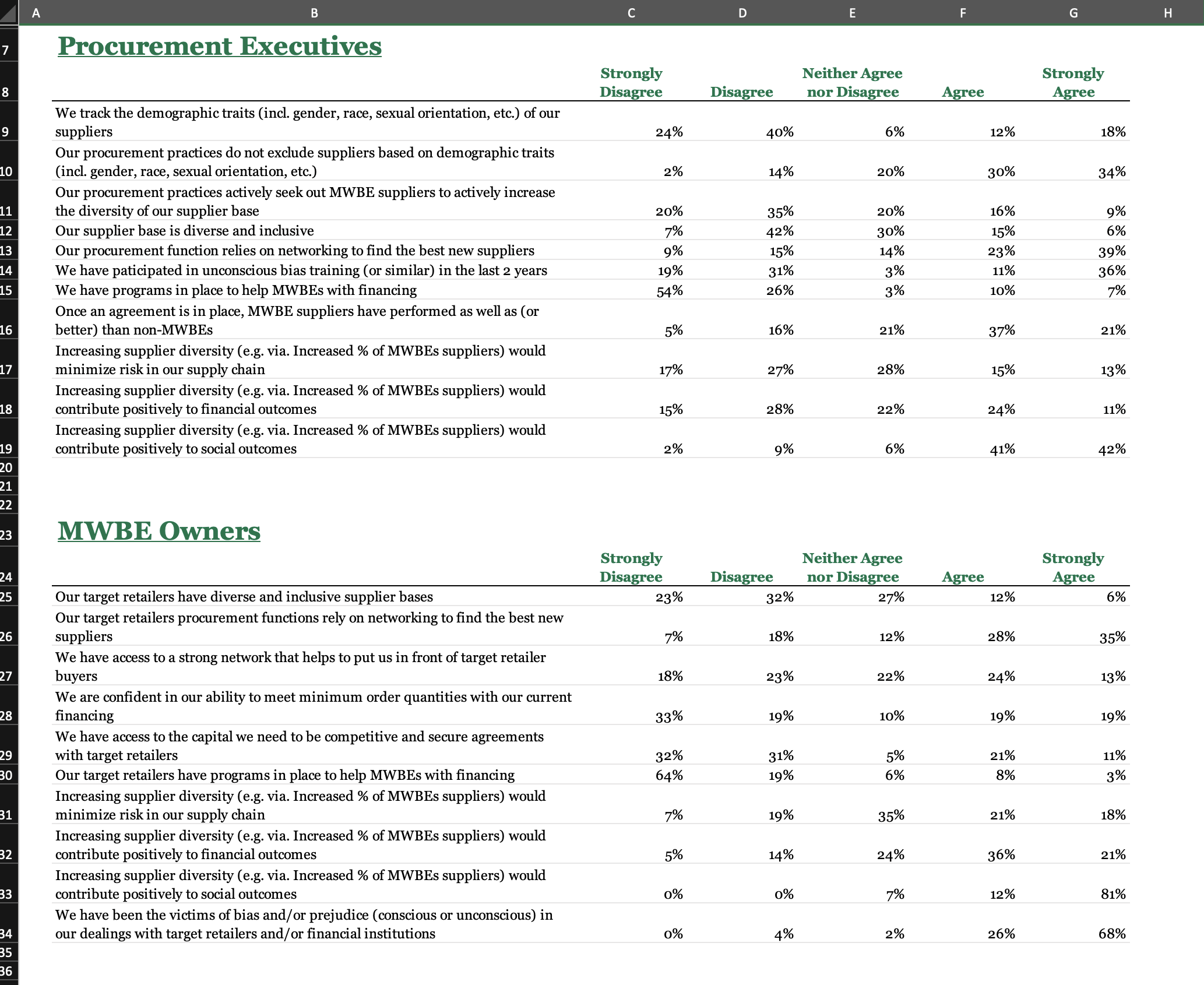
I was provided survey responses from both procurement executives and MWBE (Minority and Women-Owned Business Enterprise) owners. My first step was to review the survey results and identify patterns where both groups agreed or disagreed.
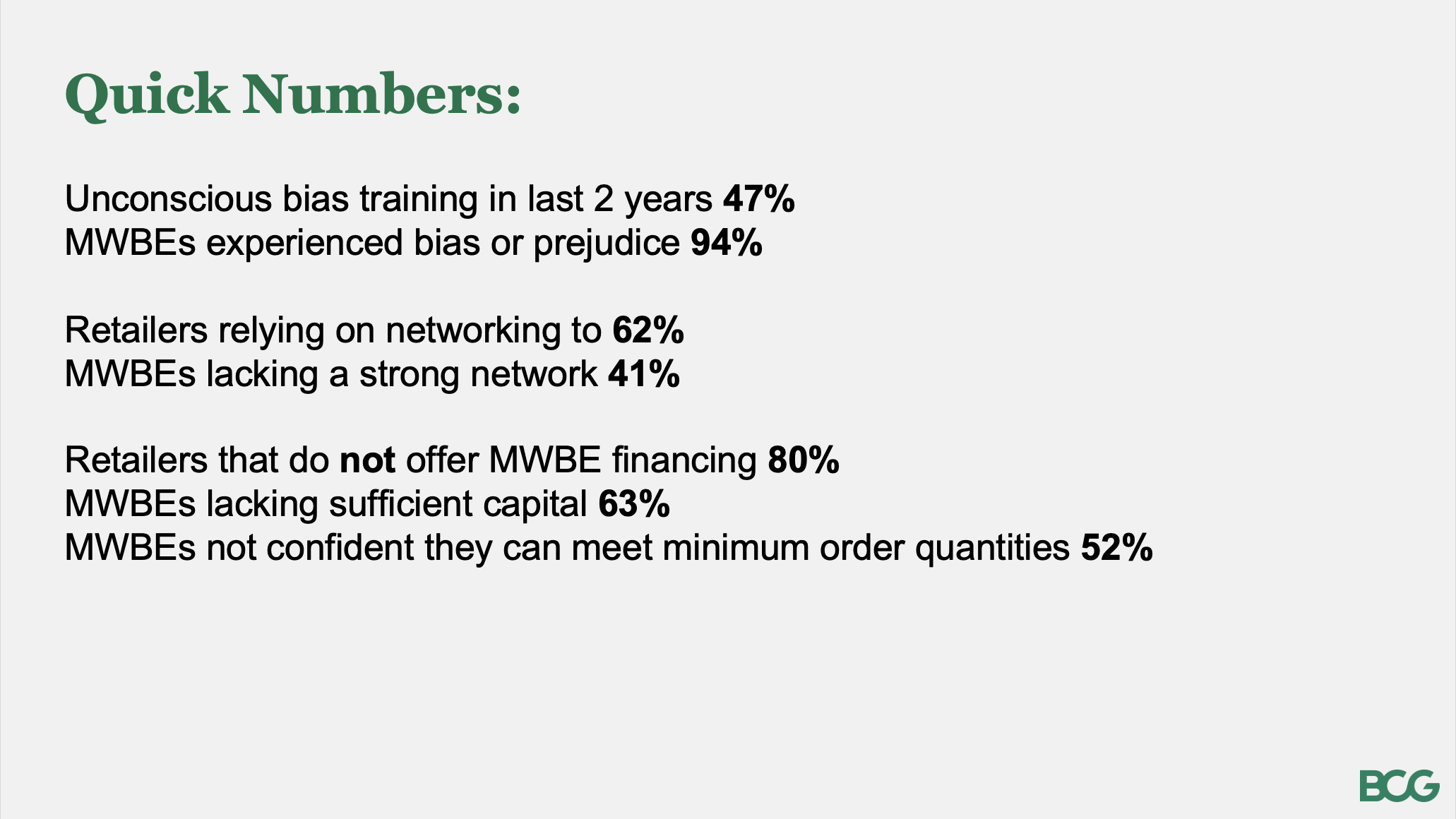
I focused on areas related to supplier diversity, financing, procurement practices, networking, and supplier performance. Rather than looking at individual responses, I looked for trends across the data. For example, a large percentage of retailers reported that they did not provide financing support to MWBEs, while many MWBE owners reported lacking the capital needed to meet large retailer order requirements. Similar patterns emerged around networking and supplier discovery, where retailers relied heavily on personal networks while many MWBEs reported difficulty gaining access to decision makers.
This process allowed me to move from raw survey results to a smaller set of key issues that appeared consistently across the data.
Validate findings using interview notes
After identifying the major trends in the survey data, I reviewed interview notes from retailers and MWBE owners. The purpose of the interviews was to understand the reasons behind the survey results and collect real-world examples from stakeholders.
As I reviewed the notes, I categorized comments into common themes. Multiple interview participants referenced difficulties obtaining financing, challenges gaining visibility with large retailers, and experiences with restrictive procurement processes. The interview quotes helped confirm that the survey findings were not isolated responses but recurring problems that affected multiple organizations.
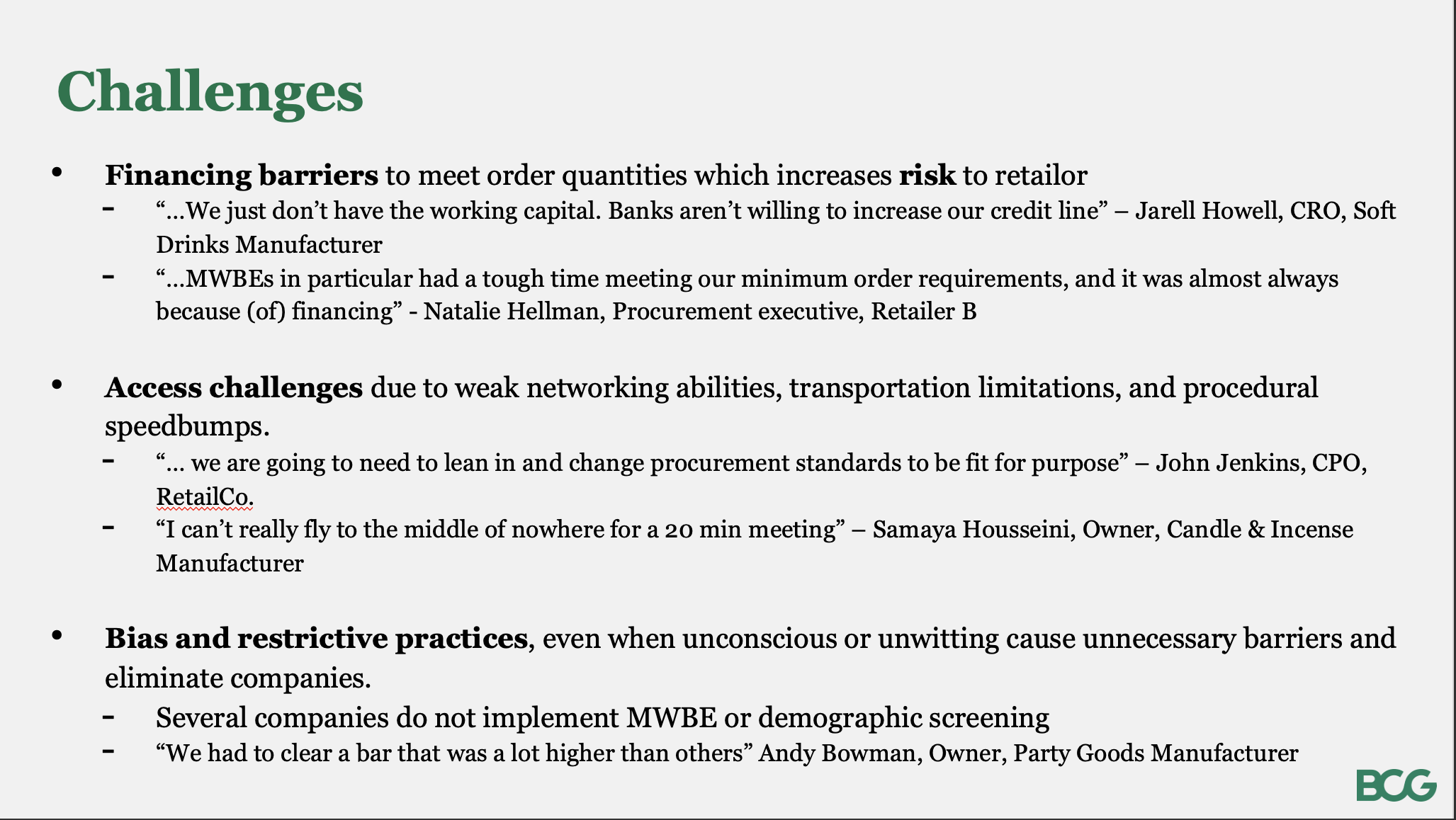
By combining survey percentages with interview feedback, I was able to validate three primary challenges:
Financing barriers
Limited access to retailer networks
Bias and restrictive procurement practices
The interview data provided context while the survey data provided measurable support for the findings.
Identify opportunities and potential solutions
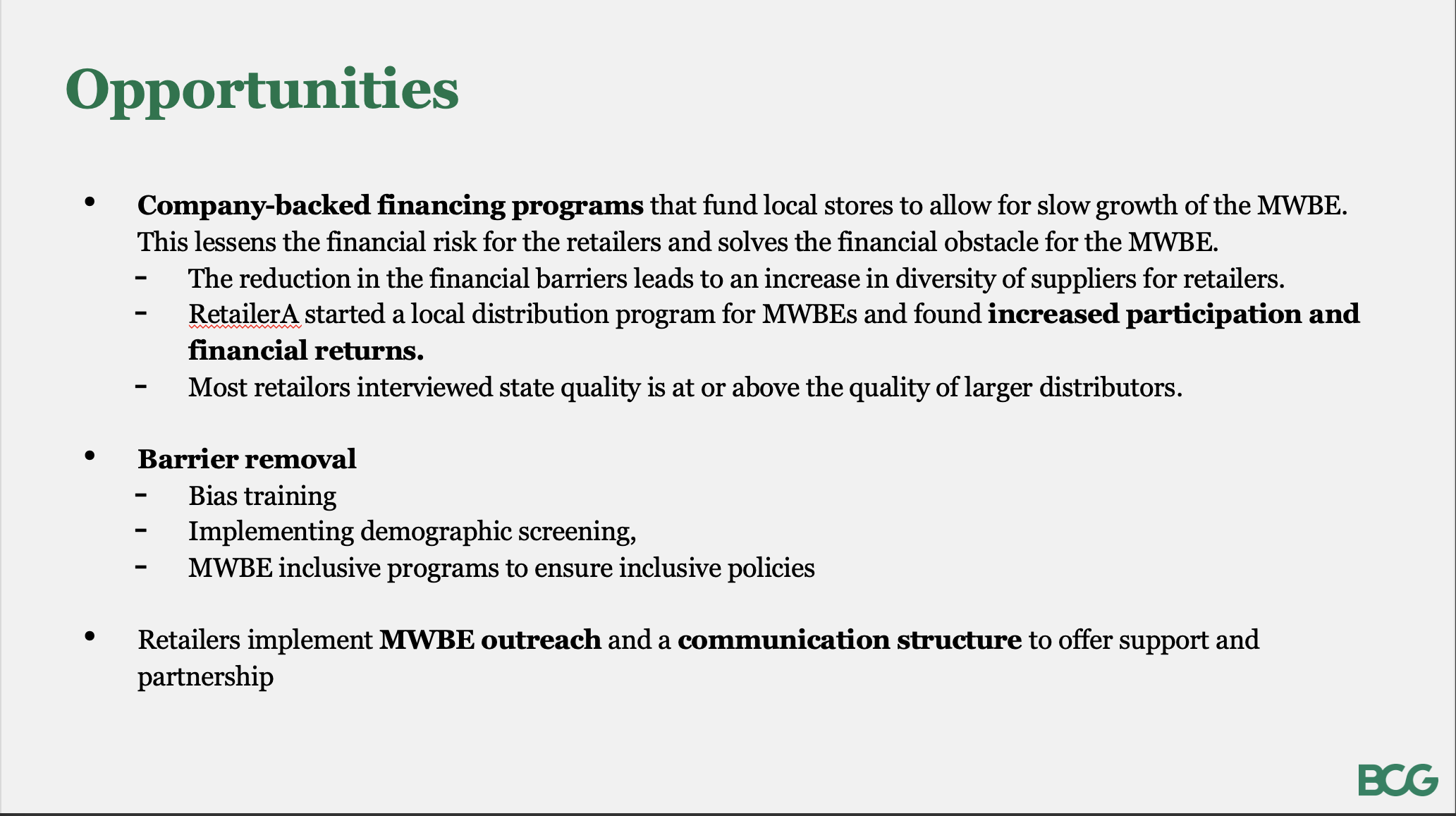
Once the challenges were clearly defined, I analyzed the interview and survey findings to determine which solutions would address the root causes of the problems.
For financing barriers, both retailers and MWBEs indicated that additional access to capital could improve supplier participation and help smaller businesses meet order requirements.
For networking and access challenges, participants discussed the importance of outreach, supplier development programs, and stronger communication between retailers and MWBEs.
For bias and procurement concerns, stakeholders suggested more inclusive evaluation processes and training programs designed to reduce barriers for diverse suppliers.
I organized these findings into solution areas and evaluated which actions appeared most likely to address multiple problems simultaneously.
Build executive recommendations
After completing the research analysis, I converted the findings into recommendations that could be presented to leadership during a recommendation meeting.
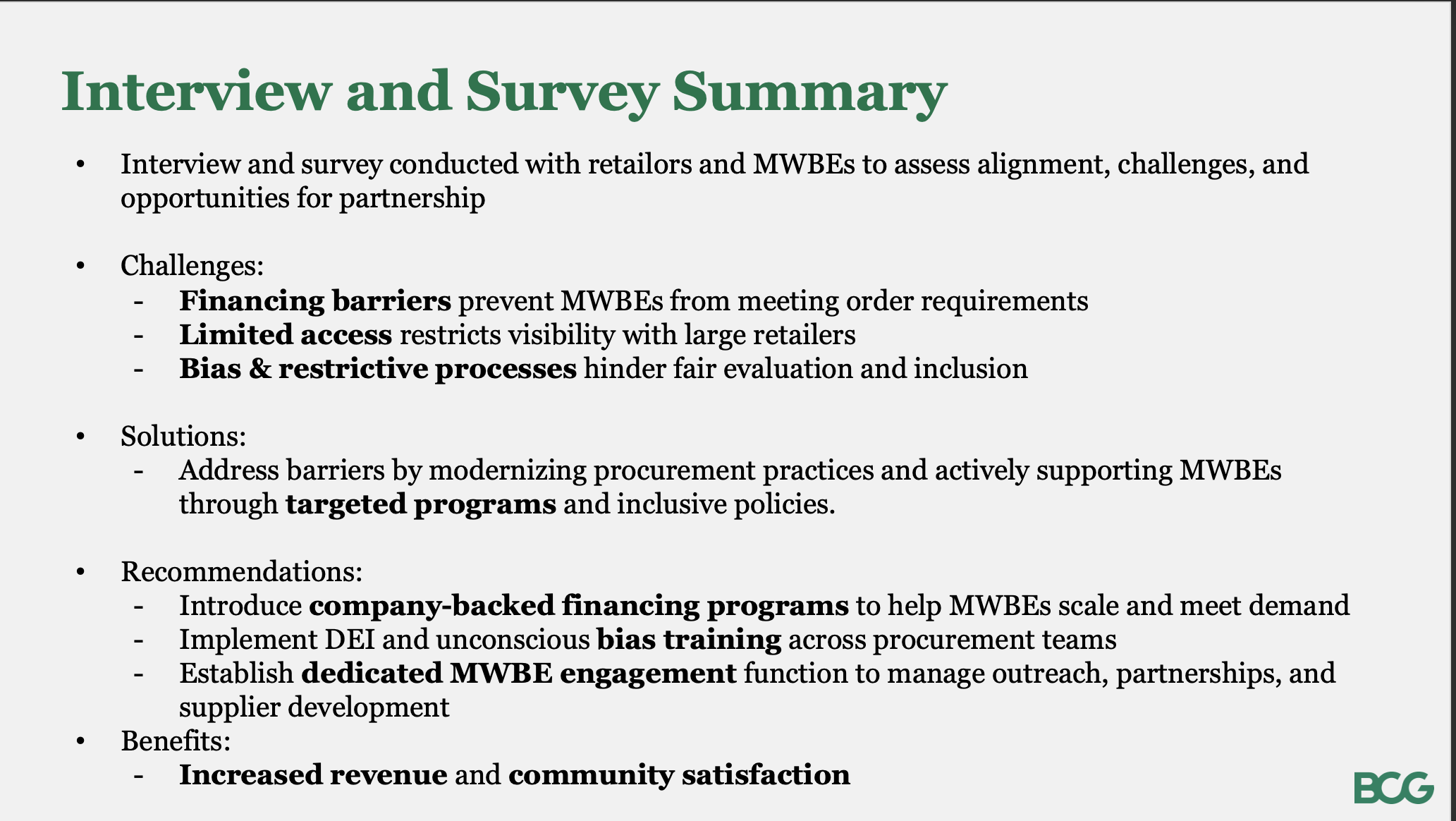
The recommendations were designed to directly address the three major challenges uncovered during the research process. Based on the evidence collected, I recommended:
Company-backed financing programs to help MWBEs secure capital and fulfill larger orders
Bias awareness and DEI training to reduce barriers during supplier evaluation
Dedicated MWBE engagement and outreach initiatives to improve communication, supplier development, and partnership opportunities
Each recommendation was directly tied back to data collected from interviews and surveys rather than personal opinion.
Support recommendations with data
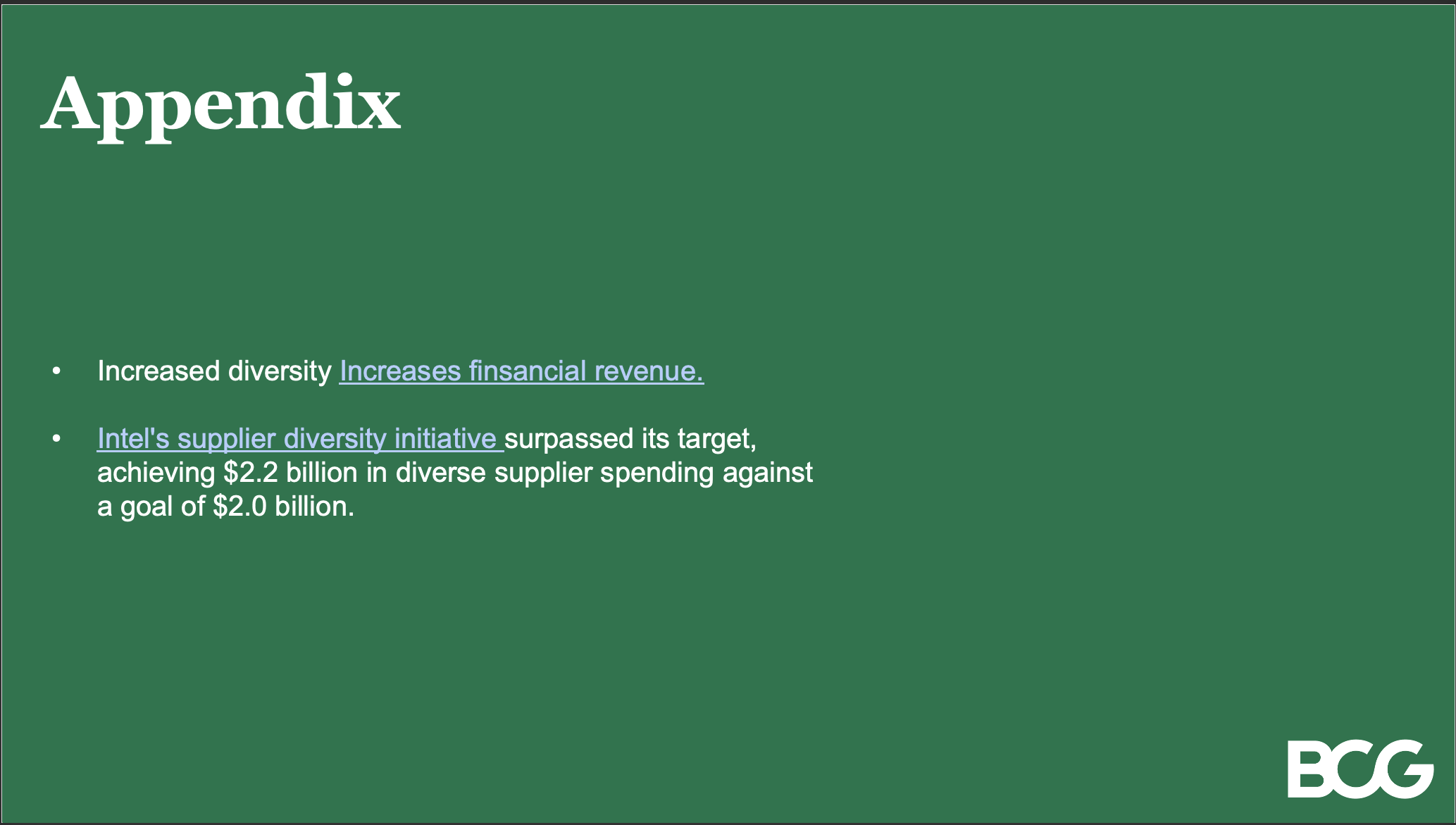
To strengthen the presentation, I created supporting slides containing key statistics and external research. These slides helped demonstrate that the recommendations were supported not only by interview and survey participants but also by broader industry research.
The quick-reference metrics summarized the most important findings from the survey analysis, while the appendix provided additional evidence and examples showing how supplier diversity initiatives can positively impact organizational outcomes.
These supporting slides ensured leadership could quickly understand both the rationale behind the recommendations and the potential business benefits of implementation.
I am not affiliated with BCG, these projects where done through their certificate program